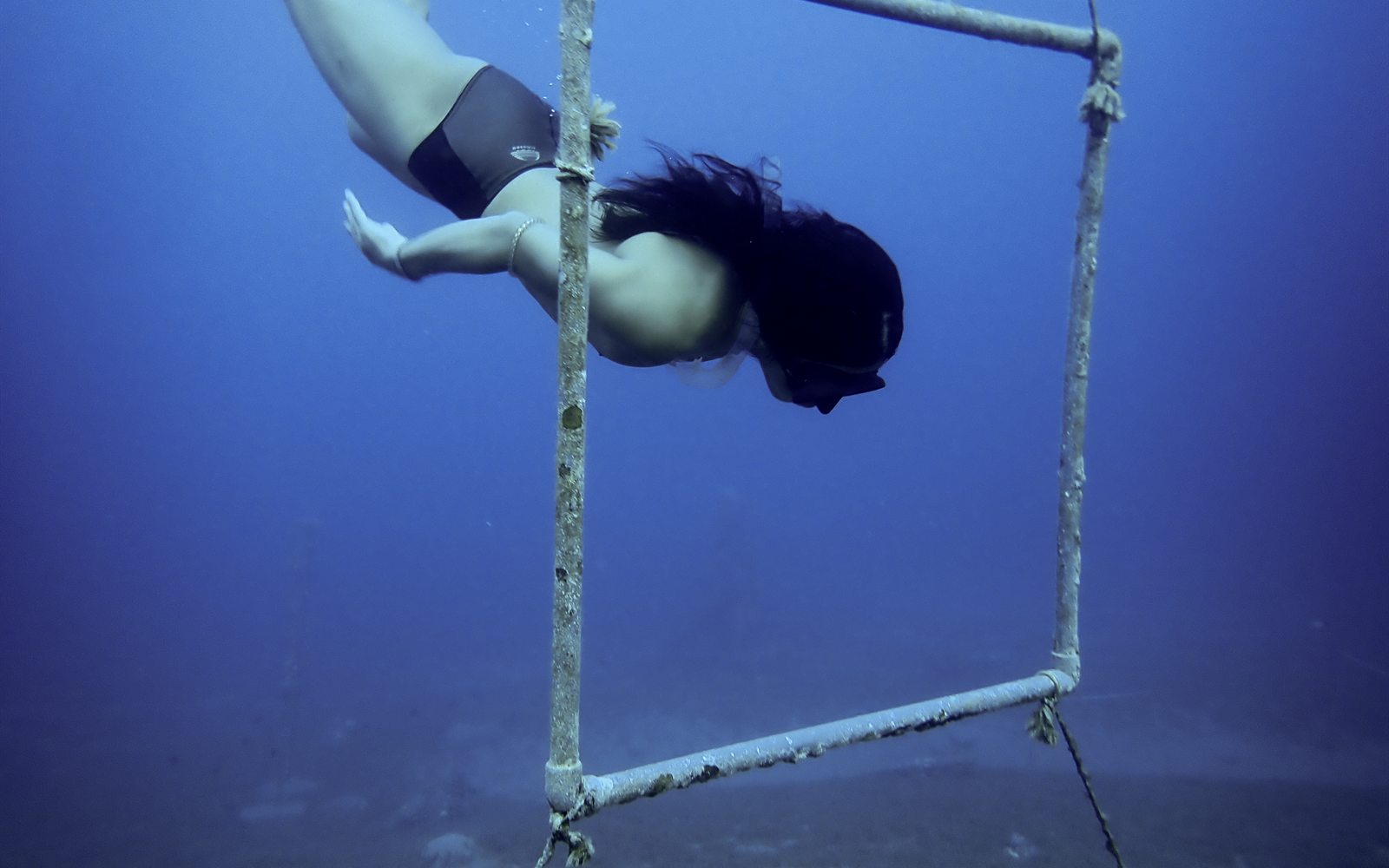
Something happens the moment your face enters the water and your breath stops. It is not something you decide or initiate, it simply begins. Your heart slows. Blood moves toward your core. A small organ below your ribcage contracts and releases a private reserve of oxygen into your bloodstream. Your vagus nerve activates and brings a chemical calm you did not ask for.
This is the Mammalian Dive Response, and it has been running in your body since before you were born.
What the MDR actually is
The Mammalian Dive Response (MDR) is a coordinated, involuntary physiological reflex triggered by breath-hold immersion. It evolved in aquatic and semi-aquatic mammals over millions of years as a survival mechanism for extended submersion, and it is present in every human being alive, regardless of whether they have ever dived, swum, or spent time in the water.
It is not a technique. It is not a skill you develop. It is hardware, built into the autonomic nervous system, activated by two simultaneous stimuli: cold water on the face and breath-hold. Both conditions together trigger the full cascade. Either condition alone produces a partial response.
10–25%
Heart rate reduction in trained freedivers. Up to 50% reported in elite athletes.
3.5M
Years of aquatic evolution encoded in this reflex, active in every human.
Dive 1
The MDR activates from your very first breath-hold in water.
Years
Regular training progressively deepens all four components of the response.
The four activations
The MDR is not a single event. It is a cascade of four distinct physiological changes, each building on the others, each serving a specific purpose in extending your safe time underwater.
01
Bradycardia, the heart slows
Within seconds of breath-hold immersion, heart rate drops autonomously, 10 to 25% in recreational freedivers, up to 50% in trained athletes. This is not relaxation. It is a specific reflex mediated by the vagus nerve. The slower heart uses less oxygen. The same supply lasts longer. This is the most immediately measurable component of the MDR and the one you will notice most clearly in your first few dives.
02
Peripheral vasoconstriction, blood retreats to the core
Simultaneously, blood vessels in the arms, legs, and skin constrict. Blood retreats from the periphery and concentrates around the heart, lungs, and brain, the organs whose oxygen demand is non-negotiable. Your hands and feet may feel cold. That is correct. The oxygen they would have consumed is now available to the organs that cannot wait. This redistribution can extend safe breath-hold time by a significant margin.
03
Spleen contraction, the hidden oxygen reserve
The spleen stores a concentrated supply of oxygen-rich red blood cells. Under diving conditions, it contracts and releases these cells directly into circulation, effectively increasing the blood's oxygen-carrying capacity on demand. Some studies show measurable hematocrit increases within the first few dives of a session. This is why experienced freedivers often find their third breath-hold of a session easier than the first: the spleen has fully engaged. In elite freedivers, the spleen can be significantly enlarged from years of training, increasing this reserve substantially.
04
Blood shift, lung compression at depth
At depths beyond 30–40 metres, water pressure compresses the lungs to a fraction of their surface volume. Without protection, this would cause a fatal lung squeeze. The MDR prevents it: blood plasma floods the pulmonary capillaries, filling the space created by compression and maintaining the lung's structural integrity. This mechanism, unique to diving mammals including humans, is what makes deep freediving physically possible at all. It is also why elite freedivers can reach depths of 200+ metres without equipment.
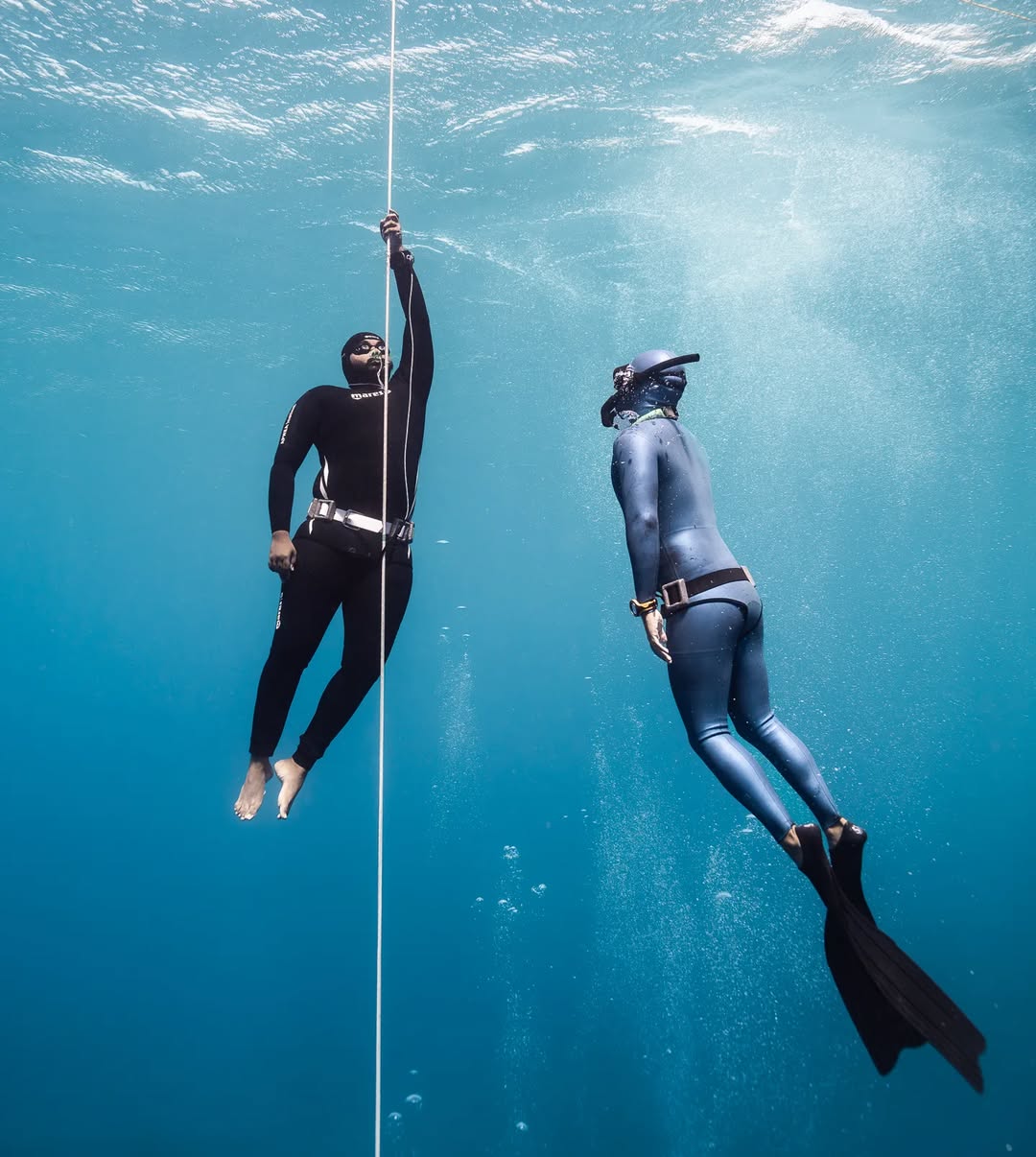
The deeper you go, the more completely the MDR engages, from the very first metre downward
Where it came from
The Mammalian Dive Response predates modern humans by millions of years. It is shared, in varying degrees, by all mammals, whales and dolphins have the most extreme versions, but seals, otters, beavers, and even dogs show measurable dive responses. Human beings retain a robust version of the reflex, more developed than most land mammals and more trainable than most people realise.
The evolutionary hypothesis is straightforward: early human ancestors, particularly those in coastal environments, who could extend their breath-hold time underwater had access to food sources (shellfish, fish, crustaceans, seagrasses) unavailable to those who could not. The MDR is part of what made coastal survival possible. It is not a remnant. It is an active, functional adaptation that modern humans carry without knowing it.
How training enhances it
The MDR is innate, but like any physiological system, it responds to training. Regular breath-hold practice produces measurable changes in all four components over time. Heart rate drops become more pronounced and faster to activate. Peripheral vasoconstriction becomes more efficient. Spleen size increases in dedicated freedivers, enlarging the oxygen reserve. Vagal tone, the autonomic nervous system's capacity for calm, improves broadly, making the entire cascade more accessible and more powerful.
Training also changes the relationship between the MDR and the CO₂ response. A trained freediver's nervous system has learned to allow the MDR to run without interference. An untrained person's anxiety and tension actively suppress the reflex, burning oxygen faster and shortening the window the MDR is trying to extend. This is why mental training, the regulation of the nervous system under pressure, is not separate from physical training in freediving. They are the same thing.
What you feel in your first dive
Most people do not feel the MDR in their first breath-hold because anxiety overrides the signal. The heart races rather than slows. The urge to breathe arrives fast. The whole system is fighting rather than cooperating.
By the second or third session, often within the same day, something shifts. The breath-hold settles. The descent stops feeling like a struggle. And somewhere between the surface and the bottom, there is a moment of quiet that is unlike any other experience in the water. The MDR is running. The alarm has softened. Your body has remembered something your brain forgot.
At Freediving Brain, the first session is designed specifically to let this happen, to give the MDR enough space to activate properly, to teach the nervous system that diving is not an emergency, and to show you what your body is actually capable of when it stops working against itself.